Common SEO Mistakes NZ Businesses Should Avoid (And How to Fix Them)
If your rankings are stuck, it’s rarely because SEO “doesn’t work.” More often, it’s because a few common SEO mistakes NZ businesses make are quietly holding back growth — sometimes for months without anyone noticing.
New Zealand may be a smaller market, but it’s competitive — especially in Auckland. The businesses that consistently rank well are not doing tricks. They simply avoid the most common SEO mistakes in NZ and focus on clean, helpful, people-first optimisation.
If you’re investing in SEO services in New Zealand, understanding these mistakes will protect your rankings and improve long-term performance.
Here are the most common SEO mistakes NZ businesses should avoid — and exactly how to fix them.
Mistake 1: Keyword Stuffing (Thinking “More Keywords = More Rankings”)
One of the most common SEO mistakes NZ websites still make is keyword stuffing — repeating the same phrase unnaturally in headings and paragraphs.
Google’s spam policies clearly discourage this practice because it damages user experience.
What It Looks Like
“Auckland plumber Auckland plumbing Auckland…”
Pages written for Google instead of humans
Footer blocks listing 30–40 suburbs with no context
Why It Hurts Rankings
Increases bounce rate
Reduces trust
Signals low-quality content
Weakens topical authority
How to Fix It
Use your primary keyword naturally (H1 + a few contextual mentions)
Write like you’re speaking to a real customer
Add related supporting terms (services, problems, benefits)
Replace suburb spam with a proper “Service Areas” section
Clean, natural content wins in New Zealand SEO.
Mistake 2: Buying Cheap Backlinks
Another major common SEO mistake NZ businesses make is buying cheap backlink packages.
Backlinks matter — but manipulative links damage trust and cause unstable rankings.
What Cheap Backlinks Usually Mean
Foreign directory links
Low-quality blog networks
Exact-match anchor text everywhere
Sudden unnatural link spikes
What Happens
Rankings fluctuate
Authority doesn’t build long-term
Potential manual penalties
The Safer NZ Strategy
Build links you would proudly show customers:
Local suppliers and partners
NZ associations
Community sponsorships
Genuine media mentions
Slow and steady wins in the NZ market.
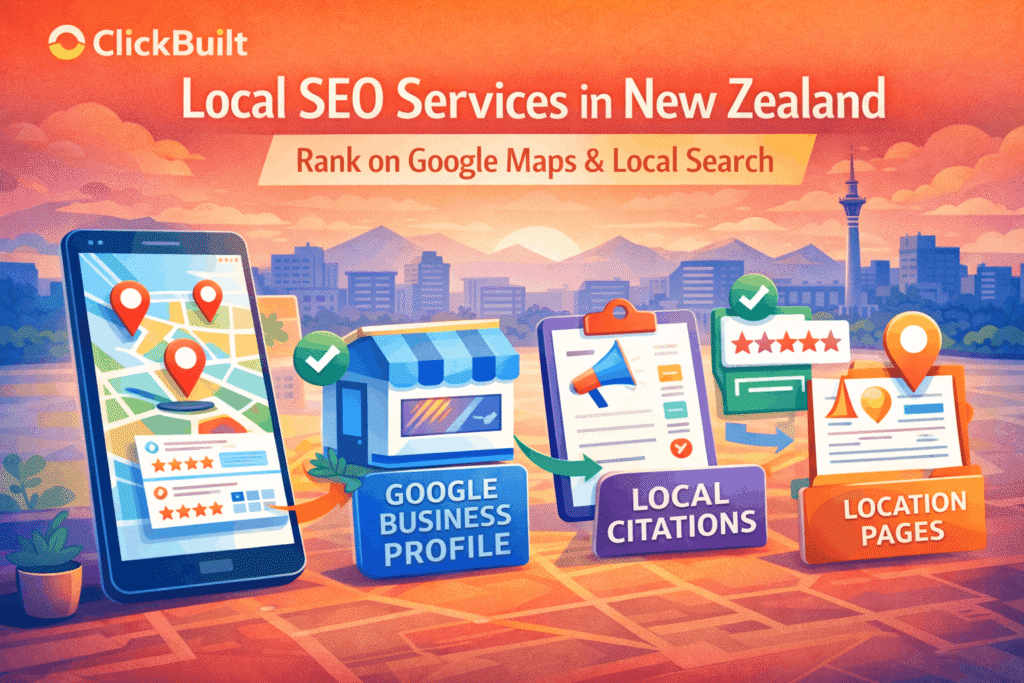
Mistake 3: Ignoring Local SEO (Google Maps)
For service businesses, ignoring local optimisation is one of the most costly common SEO mistakes NZ companies make.
Your Google Business Profile can directly impact weekly enquiries.
Common Local SEO Issues in NZ
Incorrect business category
Poor photo quality
Inconsistent name/address/phone
No review strategy
How to Fix It
Fully complete your Google Business Profile
Upload real job photos regularly
Keep NAP consistent across directories
Request reviews consistently (2–4 per month is ideal)
Local visibility often drives faster ROI than traditional organic rankings.
Mistake 4: Thin Content That Doesn’t Help
Thin content isn’t just short content. It’s content that fails to answer search intent.
Google’s helpful content guidance emphasises people-first information.
Thin Content Examples
200-word service pages
“Contact us for more info” with no detail
Duplicate suburb pages
How to Strengthen Pages
Add:
Clear service inclusions
Pricing guidance (even starting points)
FAQs
Testimonials
Photos
“How it works” process
If you fix only one thing — improve the pages that generate revenue.
Mistake 5: Keyword Cannibalisation (Competing With Yourself)
This is a very common SEO mistake NZ websites make:
Creating multiple pages targeting the same keyword:
SEO Auckland
SEO Services Auckland
Auckland SEO Company
Google doesn’t know which to rank — so none perform well.
Fix
Choose one primary page per intent
Merge duplicates
Redirect weaker URLs
Support with cluster articles
Strong structure = stronger rankings.
Mistake 6: Ignoring Technical SEO Basics
Even great content won’t rank if your site:
Loads slowly
Breaks on mobile
Has indexing errors
Has crawl issues
Technical SEO is foundational for NZ websites competing in Auckland.
Key areas:
Page speed optimisation
Mobile usability
Clean URL structure
Proper indexing control
Structured data
Technical strength supports everything else.
Mistake 7: “Set and Forget” SEO
Perhaps the biggest long-term mistake:
Doing SEO once… and stopping.
The NZ businesses that dominate rankings:
Update service pages
Add supporting content monthly
Strengthen authority signals
Maintain reviews and local proof
SEO is momentum-based. Consistency compounds.
Quick Fix Priority List for NZ Businesses
If you’re short on time, fix these first:
Improve thin service pages
Optimise Google Business Profile
Remove keyword stuffing
Stop buying cheap backlinks
Fix technical speed/mobile issues
Final Thoughts: Avoiding Common SEO Mistakes NZ Businesses Make
SEO in New Zealand is not about tricks or shortcuts.
It’s about:
Clean optimisation
Helpful content
Local relevance
Technical performance
Consistency over time
Avoid these common SEO mistakes NZ companies fall into — and your rankings, traffic, and enquiries will improve naturally.
Related SEO Guides for New Zealand Businesses